Engineering Classes for Kids in Spring TX: Build It with Stemtree
The first time I watched a group of kids assemble a small robot from a kit, I learned something that still guides my approach to teaching engineering with kids. It isn’t the motors or the sensors that capture their attention most vividly. It’s the moment when a plan takes shape, when a problem is diagnosed, and when one child realizes that a simple idea can become a working device through patience, testing, and a few well-chosen adjustments. In Spring, Texas, families seeking a robust pathway into engineering for their kids are discovering Stemtree. The program offers more than a casual afterschool activity; it’s a scaffolded experience that grows with a child’s curiosity, a bridge between curiosity and capability.
This article isn’t a glossy sales pitch. It’s a field report—rooted in real classrooms, the bite of actively solving problems, and the hard-wought lessons that come from juggling multiple learners, each with a different pace and a different lens on what counts as a breakthrough. If you’re weighing options for STEM education in Spring, you’ll find practical detail here: what makes Stemtree’s approach distinctive, how sessions are structured, what parents should expect in terms of outcomes, and how to plug Stemtree into a family’s bigger plan for developing engineering literacy.
A landscape that rewards hands-on habit
Spring is not a single campus of opportunity; it’s a web of small pockets where kids can grow their engineering identity. Stemtree’s classes sit squarely in that ecosystem, offering a progression from curiosity to competence. The hallmark is not a flashy project alone, but the disciplined practice that sits behind interesting projects. Over the years, I’ve watched sessions evolve as kids shift from passive participants to confident co-designers, and that shift rarely happens by accident. It’s the result of deliberate routines: clear goals at the start of a session, iterative testing as a normal way of working, and an emphasis on documenting what works and what doesn’t.
A typical Stemtree session begins with a concrete goal, something tangible a child can hold in their hands or visualize in a simulation. Then there’s a brief moment of planning—sketching, listing the components, and sizing up the constraints. The teacher’s role in this moment is crucial: they don’t dictate the path, they illuminate the options, drawing attention to trade-offs that matter in the real world. After that, the room becomes a workshop. Kids struggle, recalibrate, and try again. Sometimes a plan collapses under a miscalculation; sometimes it sails forward, and a small win reinforces a belief that engineering is a habit of mind as much as a set of tools.
This is where Stemtree earns its way into a family routine. From one term to the next, children aren’t just repeating the same activities with incremental difficulty. They’re building on prior designs, applying core concepts—such as force, energy, feedback systems, and modular design—in increasingly nuanced ways. The practical upshot is a durable set of skills that translate beyond the classroom: persistence, structured problem solving, teamwork, and the confidence to prototype and test ideas without fear of failure.
What makes Stemtree of Spring TX different from other programs
There’s no shortage of afterschool options for kids who love science and engineering in the Spring area. What sets Stemtree apart is a synthesis of structure and flexibility. The program leans into a clear framework for progression, but it remains responsive to a group’s dynamic. Some days, a class will revolve around a single device and its behavior, while on others the focus shifts to a broader project that invites cross-disciplinary thinking. The best instructors know when to push for speed and when to slow down for comprehension. They recognize that a quiet kid who is quietly mastering a concept may be the one who teaches the group a new way of thinking just by modeling how to approach a problem.
In practice, you’ll notice:
- A deliberate balance between guided instruction and independent exploration. Students aren’t simply following steps; they’re articulating the why behind each step, which reinforces learning and improves retention.
- A strong emphasis on real-world constraints. The projects mimic the friction of actual engineering work: time limits, material budgets, and the need to justify design choices to teammates.
- A culture that values peer learning. Kids explain their reasoning to classmates, ask good questions, and learn by listening as much as by doing. This social aspect matters because engineering is rarely a solo pursuit.
- Clear performance indicators that feel meaningful to families. Kids aren’t graded with a single test score; they build portfolios of projects, reflect on their progress, and can show tangible growth across terms.
If you’re evaluating programs, observing a session is telling. Listen to how students describe the problem, the steps they’re taking, and the trade-offs they’re weighing. Notice how the instructor nudges without dictating, how they name concepts with precision, and how they manage a classroom where a dozen different projects may be in flight at once. That balance—structure with freedom—often distinguishes a program that produces confident problem solvers from one that simply fills time with tinkering.
Stories from the workshop floor
I remember a sequence from a spring term when a group tackled a small autonomous rover. The rover’s job was to navigate a maze and avoid obstacles. It sounds straightforward until you consider surface variations, wheel traction, and sensor calibration. One student suggested using a light sensor to detect white tape on the maze floor. The team tested it, discovered inconsistent readings on a glossy tile, and pivoted to a color sensor with a different mounting angle. The pivot wasn’t flashy; it was essential. The group documented the calibration curve, made notes about how lighting affected the sensor, and tweaked the rover’s speed to reduce overshoots. The end result was a rover that could complete the maze in a reasonable time, with a clear explanation of why the sensor choice mattered and how environmental factors shaped the decision.
In another session, kids designed a small wind turbine from cardboard, popsicle sticks, and a few recycled parts. The task wasn’t only to spin a turbine but to generate measurable electricity. The learning happened as much in the measurement as in the build. They discovered that blade pitch, hub alignment, and generator coupling all influence output. Some kids wanted a bigger turbine for more power; others proposed a multi-turbine setup to compare efficiency. The teacher didn’t steer toward one solution; instead they framed it as an evidence-driven comparison, urging the group to design experiments, collect data, and draw conclusions from the results. The room hummed with the satisfaction of data in hand, the thrill of a working prototype, and the quiet pride that comes from seeing a plan turn into action.
Programs and pathways that fit a growing curiosity
Stemtree for Spring TX isn’t a one-off experience. It’s a ladder, with each rung designed to prepare a child for the next level of complexity. For many families, the choice revolves around whether to pursue a weekly afterschool class, a more intensive Saturday workshop, or a term-long program that builds across weeks. The scheduling is pragmatic: sessions align with school calendars, offering a predictable cadence that fits busy family life while still pushing students to extend their comfort zone.
What tends to unfold over a series of terms is a trajectory from novice to more capable practitioner. In a typical progression, a child might start with fundamentals—basic circuits, simple machines, and the engineering mindset of testing and iterating. As confidence grows, projects become more intricate, requiring multi-component systems, programming logic, and more careful budgeting of materials. The most successful families don’t treat Stemtree as a standalone activity but as a core component of a broader STEM plan. It pairs well with school science, coding clubs, robotics teams, and even independent maker projects at home.
The role of math in engineering education
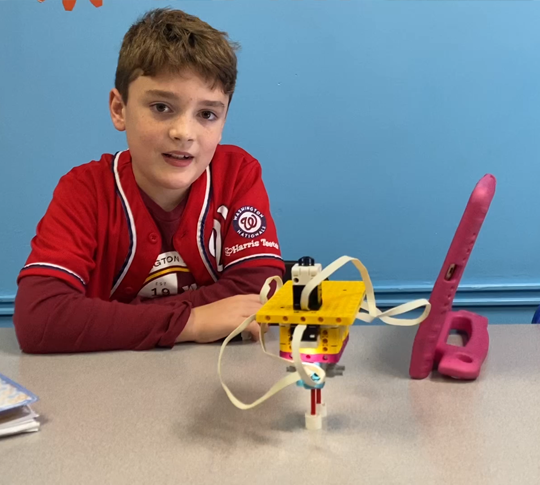
A common question from parents is how much math is required to participate effectively. The honest answer is that math is not an obstacle; it is the language of the discipline, used with increasing fluency as students grow. In early terms, arithmetic—counting, measuring, comparing quantities—comes to the fore in hands-on projects. As projects mature, students begin leveraging algebra and simple equations to estimate outputs, optimize components, and model relationships between variables. The beauty of Stemtree is that math emerges from the work itself rather than being delivered as abstract theory in a vacuum. Kids see immediate relevance when they’re trying to maximize a motor’s efficiency or balance a design so it stays upright under gusts of air from a fan.
For families, that means opportunities to practice math in meaningful contexts. You’ll hear children talk about proportional relationships between gear ratios and torque, about unit conversions when building a small weather station, and about error margins when collecting data from experiments. The emphasis is not on mastering formulas by rote, but on letting measurement and calculation become natural tools for decision making. When a child learns that a particular design choice reduces power consumption by a predictable percentage, they’ve internalized a practical math lesson that travels beyond the classroom.
A closer look at what’s offered
Stemtree’s portfolio of offerings in Spring TX covers a broad spectrum of engineering disciplines, all anchored in hands-on exploration. The programs are designed to be accessible to kids with a wide range of starting points, from those who are curious about how things work to those who already crave complex challenges. The range often includes engineering design challenges, robotics, electronics, and software-oriented projects that introduce kids to the basics of programming and control systems. The balance across disciplines helps ensure that students with different interests can find a path that resonates, while also providing exposure to fields that might not be part of their routine school curriculum.
A typical term includes several consistent elements. First, there is a kickoff session where the learning goals are stated in plain language. Then each week blends direct instruction with guided exploration, followed by time for independent project work. The instructor circulates, not to command, but to listen and to help students articulate what’s stalling their progress. Finally there’s a reflection period in which kids summarize what they learned, what surprised them, and what they want to test next. The rhythm is deliberate, but it never becomes rote. The best moments come when a student recognizes that a problem has multiple viable solutions and chooses the path that aligns best with their constraints and values.
How a typical project reflects real-world practice
The projects you’ll encounter across Stemtree sessions are designed to resemble real engineering workflows. Students start with a problem statement, translate it into a set of constraints, and then brainstorm multiple solution concepts. They sketch or model the ideas, identify the required materials, estimate costs, and set a plan for testing. As they prototype, they collect data, compare outcomes, and revise their designs. It’s not all linear; sometimes a test reveals an unexpected issue that sends the group back to the drawing board. The difference here is that the process is normalized. Struggle is not a signal of failure; it’s a recognized stage in problem solving.
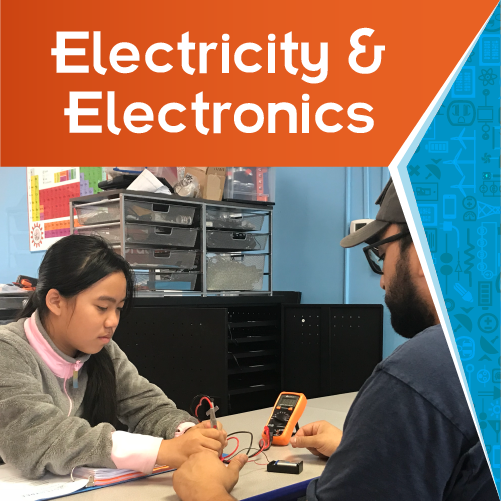
One memorable project involved building a simple automated watering system for small plants. The aim was to maintain soil moisture within an optimal range. The class explored sensors, actuators, and microcontrollers, then designed a control loop that would trigger watering when moisture dipped below a threshold. It required careful calibration of sensor readings, a robust method for preventing false positives, and a power-efficient approach to keep a small battery-powered system running. The hands-on work was complemented by short discussions about reliability engineering, why redudancy matters, and how to design a system that gracefully handles sensor drift over time. When the plants finally thrived in their tiny garden, the moment carried more meaning than a standard test pass. It was proof that engineering, in practice, is about sustaining a system in a changing environment.
Practical considerations for families
If you’re contemplating enrolling your child in Stemtree, here are a few practical realities to keep in mind. First, the culture is collaborative rather than competitive. Children cheer for each other’s breakthroughs and learn what to do when a peer’s idea works better than their own. That atmosphere can be a refreshing counterpoint to the more exam-driven experiences at school. Second, the pacing matches a student’s growing capacity, homeschool programs near me not the age on a roster. Some weeks will be more intense than others, and that variation is an intentional feature, designed to stretch without overwhelming. Third, the program aligns with a broader ecosystem of STEM activities. A family that connects Stemtree with school projects, community maker events, and home tinkering will help the concepts stick and grow deeper roots.
If your child has a more proactive interest in programming or robotics, Stemtree can be a natural hub that complements school curricula. An engineering mindset practised in the class transfers to homework, science fairs, and even spontaneous curiosity at home. The key is consistency. Regular attendance creates a continuity of practice that compounds, just like any skill-based pursuit. If your schedule permits, aim for a term-long engagement rather than a single workshop, so students can develop a workflow, iterate on designs, and build a portfolio of projects they’re proud to share with family and teachers.
Two concise reflections for families
- When you observe a Stemtree session, look not just for the final product but for the quality of the problem-solving dialogue. Are students articulating trade-offs, clarifying constraints, and testing ideas with a willingness to adjust? That is the engine of durable learning.
- Remember that engineering is as much about process as product. The capacity to iterate, document, and communicate findings will serve children far beyond the classroom. The most enduring benefits are these habits of mind: curiosity, resilience, and a practical belief that learning through doing is a strong path toward mastery.
A practical roadmap to choosing the right Stemtree experience
If you’re deciding whether Stemtree is the right fit, here’s a practical way to think about it. Start with goals. Is your child most excited by designing things that move, by building sensors that interact with the real world, or by writing a little code to automate tasks? Stemtree offers avenues across all three, with a core emphasis on the engineering design process. Next, consider your child’s current engagement level. Some students come in curious but unsure where to begin; others show a clear appetite for hands-on challenges and are ready to dive into more complex projects from the start. Stemtree sessions are designed to integrate with both profiles, but a honest self-assessment helps you place your child in a cohort that matches their readiness and keeps them hungry for more.
Another practical factor is parental involvement. Stemtree doesn’t demand heavy supervision at home, but parents who show interest in the topics their children explore tend to reinforce motivation. Asking kids to explain a project, to walk through the design decisions, or to demonstrate the functioning prototype can turn a classroom achievement into a family triumph. It’s not about pushing for perfect results; it’s about encouraging a thoughtful reflection on what worked, what didn’t, and how to improve next time.
A deeper look at the math and technical depth you can expect
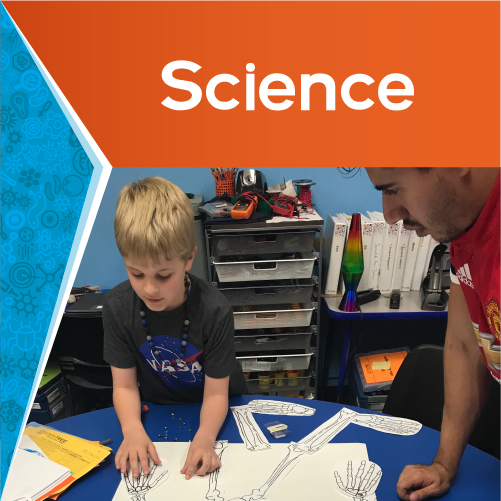
For families with math-focused or technically oriented kids, Stemtree offers meaningful depth without becoming inaccessible. The early modules emphasize measurement, units, and the basics of how different physical principles interact. As students progress, they encounter simple circuits, control logic, and the idea of feedback loops. The learning is project-driven, so even when a lesson leans toward a topic like circuit design, it’s anchored to a concrete outcome—the rover that follows lines or a sensor array that measures distance. The result is not abstract math practice; it’s math in service of building something that works.
From a long-term perspective, this approach helps avoid the common trap of rushing children through advanced topics before they have a tangible grasp of the underlying concepts. It also creates space for kids who pick up skills more quickly to push into more complex territory, while those who need extra time aren’t left behind. The outcome is a more inclusive learning environment where both curiosity and competence can grow in parallel.
What to expect in terms of outcomes
Parents often ask what measurable outcomes Stemtree delivers. The honest answer is that outcomes vary with individual effort, but there are consistent through-lines. Students develop a working vocabulary for describing systems and their behavior. They gain experience with iterative design, including how to test ideas, capture data, and revise plans based on evidence. They build a portfolio of projects that demonstrates growth across a term or year, not just a single success. They also acquire practical problem-solving strategies that transfer to school assignments, science fairs, and even everyday tinkering at home.
Beyond the tangible artifacts, the intangible benefits are equally valuable. Children learn to collaborate with peers, articulate their reasoning clearly, and manage the time constraints that real-world projects impose. They learn to navigate setbacks with grit, to reframe failure as information, and to persist until a solution emerges. These are the competencies that stay with a learner long after the projects are put away.
Two concise lists to help you compare at a glance
What stems from the core Stemtree experience
- Hands-on, project-driven learning that mirrors real engineering practice
- A blend of guided instruction and independent exploration
- Emphasis on iterative testing, data collection, and evidence-based reasoning
- A collaborative culture that values peer learning and constructive feedback
- A clear progression that builds from fundamentals to more complex systems
What you should check when evaluating a program in Spring TX
- Alignment with school and family schedules, ensuring consistent participation
- Availability of term-long cohorts that allow for meaningful progression
- Access to a portfolio-worthy set of projects across disciplines
- Qualified instructors with real-world engineering experience and classroom leadership
- A culture that supports curiosity and resilience without harsh competition
A closing thought about nurturing inquiry
Engineering is a discipline of disciplined curiosity. It rewards kids who show up ready to test ideas, listen to feedback, and revise their approach. Stemtree in Spring TX embodies that ethos in a way that feels both rigorous and human. It isn’t about turning every child into a professional engineer by age ten; it’s about expanding the range of what a child believes is possible, equipping them with the tools to explore, and giving them the stamina to keep exploring when the first attempt doesn’t work.
If your aim is to cultivate a mindset that sees problems as solvable and learning as a process, Stemtree offers a compelling path. The early sessions plant seeds of agency—students learn they can design a thing, test a plan, and adjust course based on what the data reveals. As they advance, those seeds mature into a robust engineering habit: the confident posture of a thinker who knows how to gather information, evaluate options, and commit to a course of action with readiness to iterate when new information arrives.
The Spring TX landscape rewards families who invest in a child’s long view of growth. Stemtree presents a structured yet flexible architecture that respects a child’s pace while gently elevating their capabilities. It’s a model that doesn’t pretend learning happens overnight; it honors the patient, often incremental progress that characterizes genuine mastery. For families ready to lean into that journey, the payoff is not only in the projects completed but in the quiet, enduring confidence that comes from knowing one can design, test, and refine with clarity and purpose.